New Delhi: As 2025 came to an end, India’s food management system stood more resilient, inclusive, and technologically driven than ever before. Through sustained free foodgrain distribution, strong procurement operations, digital reforms, and supply-chain optimisation, the Department of Food and Public Distribution reinforced the twin objectives of protecting vulnerable households and ensuring fair returns for farmers.
Free Foodgrains: Securing the Poor
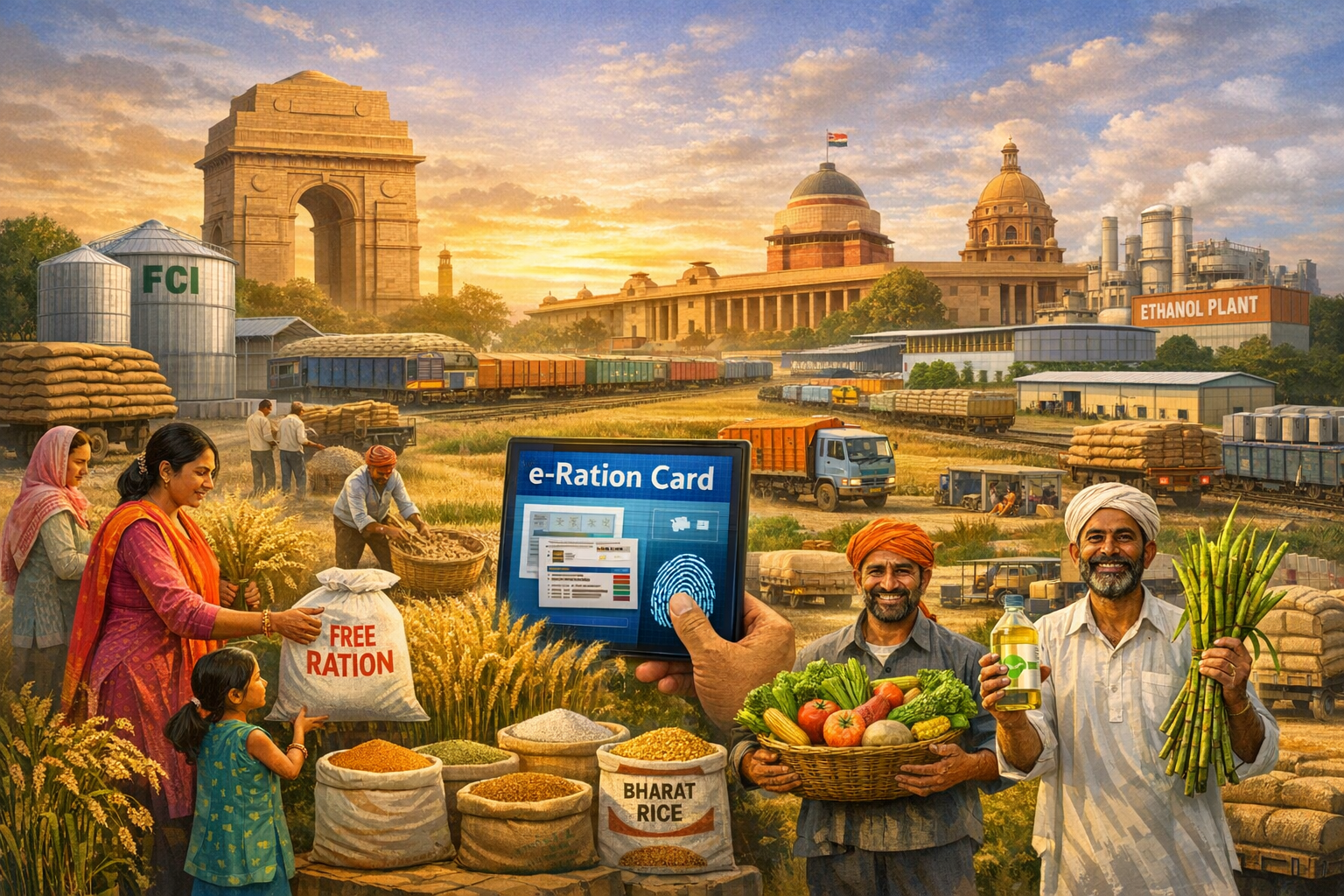
The Pradhan Mantri Garib Kalyan Anna Yojana (PMGKAY) continued to remain the backbone of India’s food security framework in 2025. Extended for five years from January 2024, the scheme ensured free foodgrains for nearly 80 crore beneficiaries under the National Food Security Act, covering both Antyodaya and Priority Households. With earlier subsidised prices fully withdrawn, eligible families now receive rice, wheat, and nutri-cereals at zero cost, insulating them from food inflation and income shocks.
Welfare Allocations at Scale
For 2025–26, over 608 lakh tonnes of foodgrains were allocated across welfare schemes. The Targeted Public Distribution System accounted for the bulk, while nutrition programmes such as PM Poshan and ICDS received substantial support. Additional allocations were earmarked for welfare institutions, hostels, festivals, and disaster response, ensuring uninterrupted supply during emergencies.
Digitisation Driving Transparency
By 2025, the Targeted Public Distribution System had achieved near-total digitisation. More than 20.5 crore ration cards covering close to 80 crore beneficiaries were digitised nationwide. Aadhaar seeding crossed 99.9 per cent, while almost all Fair Price Shops were equipped with electronic Point of Sale machines. Aadhaar-based authentication dominated transactions, significantly reducing leakages.
An AI-powered grievance redressal platform, ASHA, was introduced to collect beneficiary feedback using multilingual tools, automated sentiment analysis, and rapid complaint resolution.
One Nation One Ration Card: Mobility with Security
The One Nation One Ration Card initiative achieved full national coverage, enabling migrant workers to access foodgrains anywhere in the country. Since inception, the scheme has recorded nearly 196 crore portability transactions, with 2025 alone witnessing over 32 crore such transactions under PMGKAY.

Modern Logistics and Storage
Foodgrain movement became more efficient through expanded rail, road, containerised, and coastal shipping networks. Steel silo capacity increased sharply under public-private partnerships, while digital platforms such as Depot Darpan and Bhandaran 360 strengthened real-time monitoring, infrastructure assessment, and warehouse management.
Farmer-Centric Procurement
Procurement operations remained robust across wheat, paddy, coarse grains, and millets, benefiting crores of farmers. Jute procurement ensured sustainable packaging, while stock limits on wheat curbed hoarding and stabilised prices.
Market Intervention and Credit Support
Affordable staples continued under Bharat Atta and Bharat Rice through open market sales. Food subsidy releases remained strong, supporting both central and decentralised procurement states. The e-NWR credit guarantee scheme expanded access to formal finance for small and marginal farmers.
Supply Chain Optimisation and Sugar Sector Reforms
The Anna Chakra initiative improved route planning and reduced logistics costs and emissions nationwide. Meanwhile, the sugar sector strengthened farmer payments, expanded ethanol blending to over 19 per cent, boosted investments, and advanced digital governance through real-time monitoring platforms.
By the close of 2025, India’s food security system had emerged more efficient, transparent, and farmer-focused—firmly aligned with the goal of inclusive growth and nutritional assurance for all.